A building is more than its structural components. How we design entrances, façades, and surfaces shapes how people experience and use a space long after construction ends.
Today, material selection in architecture goes beyond structural strength. Designers and homeowners now prioritize a balance of aesthetics, performance, maintenance, and long-term value. This shift has led to the adoption of modern surface solutions like WPC louvers and HPL sheets.
Bangalore’s fast-changing architectural landscape has increased demand for materials that support modern design while remaining practical. Whether for wood-inspired exteriors or refined interior panels, choosing the right material can transform a standard surface into a key design element. Makmore addresses these needs by offering surface solutions that help architects, designers, builders, and homeowners create contemporary spaces with clear functional intent.
WPC Louvers Manufacturers Bangalore: Creating Depth, Rhythm, and Contemporary Character in Modern Architecture
Adding dimension to surfaces makes architecture more visually engaging. While flat walls serve a structural purpose, well-designed louvers can introduce rhythm, shadow, and texture.
This is why WPC louvers are gaining traction in modern projects. Their linear design and wood-like appearance add warmth to minimal spaces while preserving a contemporary look. Working with experienced WPC louver manufacturers in Bangalore ensures consistency in appearance, proper material selection, and solutions tailored to specific project needs.
WPC, or Wood Plastic Composite, blends wood fibers with polymer materials. This combination offers the look of wood with improved durability and lower maintenance, making it a practical alternative for many applications. Louvers offer more than decorative value. Their structured design can break up large surfaces, define zones, and strengthen the architectural identity of façades.
Where WPC Louvers Can Add Architectural Value
- Exterior façades where texture and vertical or horizontal rhythm are desired.
- Balcony and terrace areas requiring a contemporary decorative element.
- Feature walls in residential, commercial, and hospitality environments.
- Interior spaces where designers want to introduce warmth without using conventional timber.
Effective louver installations rely on thoughtful design. Factors like spacing, orientation, proportion, color, surrounding materials, and lighting all impact the final result. A well-designed louver installation draws attention through subtlety. It stands out by complementing the overall design.
From Plain Surfaces to Designed Spaces: Why WPC Louvers Are Becoming a Distinctive Element of Contemporary Design
Modern architecture values simplicity, but simple spaces can still be visually engaging. A well-planned louver wall interacts with light throughout the day. Sunlight creates shifting patterns, while nighttime lighting can highlight the installation’s lines and depth. This interaction with light gives louvers a dynamic quality that flat surfaces typically lack.
Louvers can also create visual separation without closing off spaces. In interiors, they help define zones like living areas while maintaining openness. This flexibility allows architects and designers to use WPC in a range of styles, from minimalist homes to advanced commercial interiors.
HPL Sheet Distributor in Bangalore: Bringing Versatility, Texture, and Practical Surface Design to Everyday Architecture
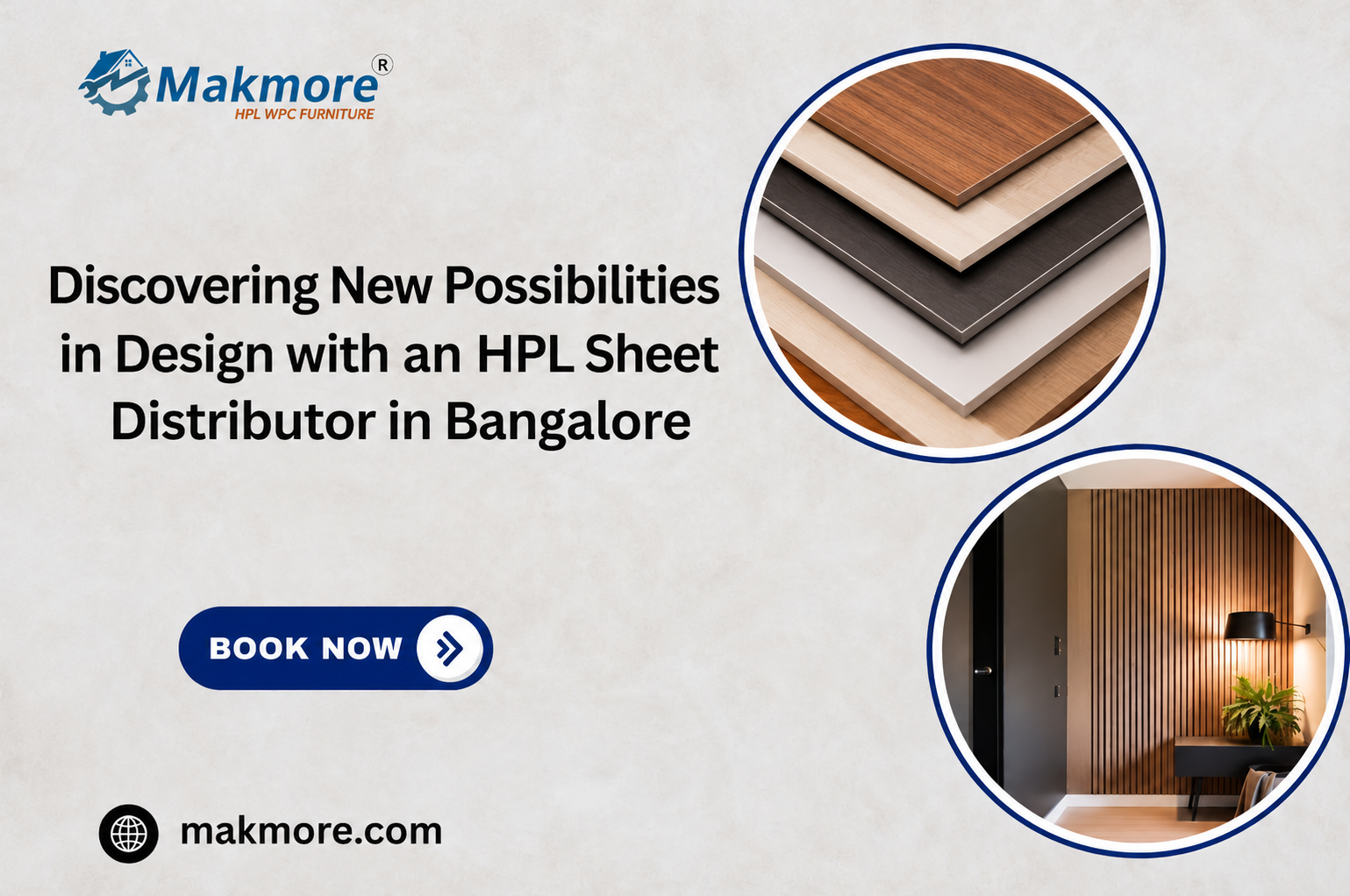
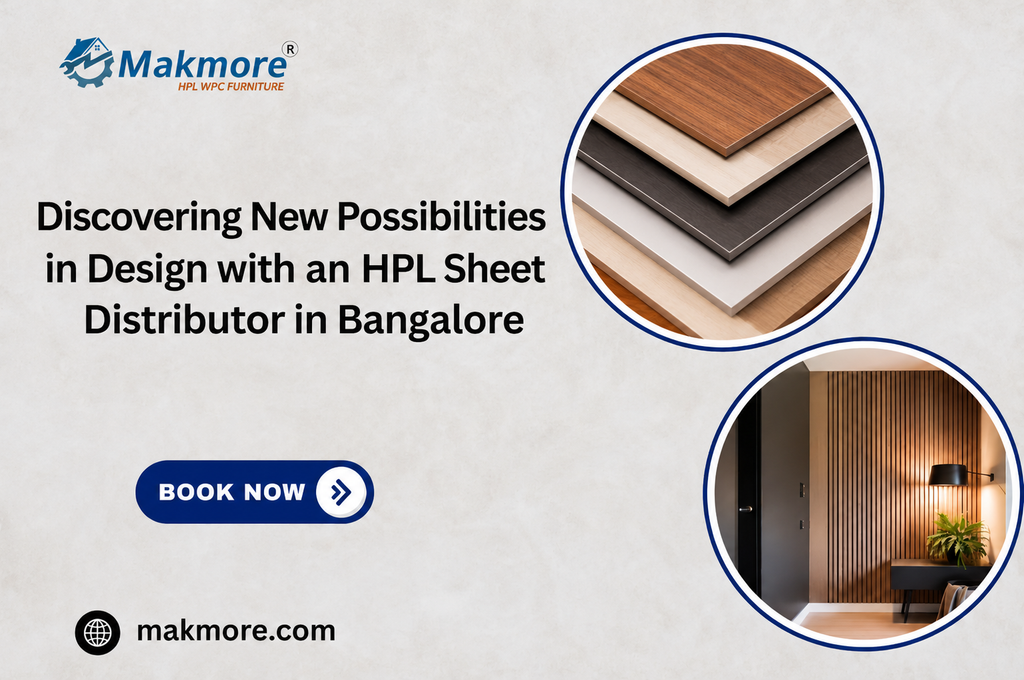
Louvers add depth and dimension, while surface panels help define the overall visual language of a space. HPL, or High-Pressure Laminate, is widely used for decorative and functional surface applications because it can offer a broad range of colors, textures, patterns, and finishes.
Partnering with a reliable HPL sheet distributor in Bangalore gives architects, contractors, and designers access to surface solutions that fit a variety of project needs.
HPL stands out for its blend of visual versatility and practical performance. Depending on the product, it can be used for furniture, wall panels, interior elements, partitions, and other architectural applications. A key advantage of HPL is its ability to replicate a wide range of visual styles.A surface can appear warm and timber-inspired.It can look refined and stone-like.
It can become bold and contemporary.Or it can stay understated, letting furniture and lighting take center stage. This versatility means HPL is more than a decorative surface; it helps define a space’s character.
Designing with HPL: When Surface Selection Becomes Part of the Architecture
Every interior has a personality.Some spaces need warmth.Some need restraint.Some demand visual drama.Others benefit from quiet sophistication. HPL lets designers create different moods with a variety of finishes and patterns.
For example, a wood finish can soften a modern office, a stone look can add solidity to a reception area, and a neutral finish can provide a clean backdrop for furniture and décor.
However, selecting materials goes beyond choosing attractive patterns. It requires understanding the environment, usage patterns, surrounding materials, installation needs, maintenance, and the overall design concept.
What to Consider When Selecting HPL Sheets
- Design language: Choose colors and textures that complement the overall architectural concept.
- Application: Consider whether the sheet will be used for furniture, walls, partitions, or another purpose.
- Surface characteristics: Evaluate the finish based on the expected level of handling and use.
- Overall coordination: Ensure the HPL works harmoniously with flooring, lighting, furniture, metal, glass, and other materials.
Considering these factors together ensures that surfaces contribute to the overall design rather than standing alone as isolated choices.
WPC Louvers and HPL Sheets: Two Different Materials, One Larger Architectural Vision
WPC louvers and HPL sheets have distinct roles, but they can work together effectively in a single design. Louvers introduce linear structure and dimensionality. HPL can provide broad surface continuity and visual variation.
Used together, these materials create layered designs that balance texture, color, depth, and proportion. For example, a commercial façade might use textured HPL as the main surface, with WPC louvers adding contrast and rhythm to specific areas.
In a modern residence, wood-inspired louvers can frame the entrance, while matching HPL surfaces extend the design theme inside. The result is a cohesive material palette. This approach creates continuity between exterior and interior spaces. The exterior and interior share a unified visual language.
Choosing Materials with a Long-Term Perspective Instead of Following Temporary Design Trends
Architectural trends evolve rapidly. Materials that seem current today may look dated in a few years. Timeless design comes from understanding materials and their long-term relevance, not just following trends.
A well-chosen surface supports the architectural concept without dominating it. Colors should adapt to different lighting, textures should stay relevant, and materials must suit the environment and intended use.
This is especially important for projects where surfaces are intended to last for many years. The most effective spaces are not always the most decorated. They are spaces where every material serves a clear purpose.
Building Better Spaces Through Thoughtful Material Choices
Selecting architectural materials is about finding the right balance between aesthetics and function. A beautiful material that lacks practicality can be hard to maintain.
Functional materials without visual appeal can leave a space feeling uninspired. The best designs combine both qualities. Makmore’s approach treats materials as integral to a space’s identity, not just as finishing products.
For projects in Bangalore, understanding the options provided by WPC louvers and HPL sheets can help architects, builders, designers, and homeowners explore new design directions.
A wall can serve more than just a dividing function. A façade can offer more than protection from the elements. A surface can contribute more than just a finished look. With thoughtful design, surfaces can express a space’s character. Ultimately, modern architectural materials give designers the tools to turn ideas into reality.
Faq
Q1. Why work with an HPL Sheet distributor in Bangalore ?
A1. An HPL Sheet distributor in Bangalore can provide access to different HPL options and help customers explore materials according to their design, application, and project requirements.
Q2. Can WPC louvers be used with HPL sheets?
A2. Yes, the two materials can be incorporated into the same design when their colours, textures, proportions, and applications are appropriately coordinated.
Q3. Are WPC louvers suitable for modern homes?
A3. WPC louvers can complement modern homes particularly well because their linear profiles can add warmth, texture, and architectural depth to contemporary spaces.
Q4. Where are HPL sheets commonly used?
A4. Depending on their specifications, HPL sheets can be used for furniture, wall surfaces, partitions, interior features, and other decorative or functional applications.
Q5. How should I select between different WPC louver designs?
A5. Consider the project’s architectural style, installation location, desired spacing, colour, texture, lighting, surrounding materials, and maintenance expectations before selecting a design.