
Architecture speaks in its own dialect. Some buildings declare themselves with striking geometry, others whisper with subtle grace, and a few invite you in with textures that soften concrete into something almost alive. In Bangalore, where the cityscape is constantly reinventing itself, beauty and function are now inseparable companions. Here, every surface is intentional, and every material adds a new chapter to the building’s unfolding story.
The façade is the building’s introduction to the world. It stands resilient against sunlight, rain, dust, shifting temperatures, and the city’s daily pulse. Despite this constant exposure, it must retain its elegance. This careful balance between endurance and beauty is why materials like HPL cladding and WPC louvers have become essential tools for today’s architects.
Makmore embodies this philosophy by curating materials that lend buildings depth, character, and enduring allure. Cladding is not just a shell; it is a canvas where texture, proportion, color, and material collaborate to shape spaces that feel intentionally crafted.
A New Architectural Vocabulary Where Texture, Proportion, and Purpose Shape the Modern Façade
A modern façade often finds its strength in restraint. A single, well-chosen texture can speak louder than layers of ornament. The gentle grain of wood-inspired surfaces, the crisp lines of contemporary panels, or the rhythmic repetition of vertical louvers can all spark intrigue without overshadowing the architecture itself.
This is why choosing the right materials is an act of foresight. The best exteriors feel like they belong, not like afterthoughts. They converse naturally with windows, balconies, entrances, lighting, landscaping, and every neighboring surface.
In Bangalore’s vibrant architectural landscape, this harmony is crucial. Homes, offices, shops, schools, hotels, and commercial spaces each seek their own voice. HPL and WPC solutions empower designers to explore these unique expressions while keeping the architectural language unified.
HPL Cladding Sheet Service near Bangalore for Exteriors That Carry Beauty Beyond the First Impression
HPL cladding is prized for crafting sleek, sophisticated surfaces that embody modern style. Made by pressing resin-infused layers under high pressure, it forms a robust, versatile skin that can elevate any design vision.
If you are seeking HPL Cladding Sheet Service near Bangalore, think beyond just sourcing materials. True success lies in choosing the right surface, understanding its role, planning the installation, and ensuring the final result feels like a natural extension of the architecture.
HPL cladding brings a refined personality to exterior walls, entrances, façades, balconies, commercial elevations, and architectural highlights. Its crisp look is ideal for spaces where simplicity, precision, and modern detailing take center stage.
The elegance of a thoughtfully designed HPL façade is found in its quiet confidence. It lets lines, shadows, textures, and proportions do the talking, creating impact without ever raising its voice.
What Makes HPL a Thoughtful Choice for Contemporary Architecture?
HPL invites designers to play with architectural moods. Wood-inspired finishes can infuse warmth into a stark industrial shell, while deep or neutral tones can set a bold, contemporary stage.
This material also partners beautifully with other façade elements to create striking contrasts. Glass lends transparency, metal adds edge, concrete grounds the design, and HPL weaves in texture to tie it all together.
Important aspects to consider before choosing an HPL cladding solution:
- The architectural style and visual identity of the building
- Suitable textures, colors, and surface finishes
- Environmental and application requirements
- Professional planning and installation considerations
WPC Louvers: Giving Walls a Rhythm of Light, Shadow, and Movement
Sometimes architecture needs more than a flat surface. It needs rhythm. WPC louvers answer this call, introducing rhythm through repetition. Their linear patterns break up expansive walls, adding depth and visual intrigue. Depending on the design, louvers can stand out boldly or blend in with quiet sophistication.
WPC, or Wood Plastic Composite, combines characteristics associated with wood and polymer-based materials to create an architectural solution suited to contemporary design applications. Its wood-inspired appearance makes it particularly attractive for spaces where designers want natural warmth without moving completely toward traditional materials.
In contemporary buildings, louvers are more than decoration. They shape the façade, offer privacy, filter views, and add intricate detail, all depending on their placement and design.
WPC Louvers Supplier in Bangalore For Spaces That Need Warmth Without Losing Their Modern Identity
Choosing the right WPC Louvers supplier in Bangalore is crucial when your project calls for consistent looks, dependable quality, timely availability, and the perfect fit for your design.
WPC louvers fit seamlessly into homes, offices, balconies, entrances, commercial spaces, hotels, partitions, and select interiors. Their linear form lets architects craft patterns that draw the eye and transform plain surfaces into memorable features.
The real strength of louvers lies in their ability to work with light. As daylight moves throughout the day, the gaps between the profiles create changing patterns of brightness and shadow. A wall that looks simple in the morning can take on an entirely different character as the sun moves across it.
Why WPC Louvers Are Becoming an Interesting Architectural Detail
- They introduce linear depth and visual rhythm to large surfaces.
- Wood-inspired textures create a warmer architectural atmosphere.
- They can complement glass, concrete, metal, stone, and other materials.
- They provide designers with opportunities for creative façade compositions.
Building Materials That Follow the Architecture Instead of Fighting Against It
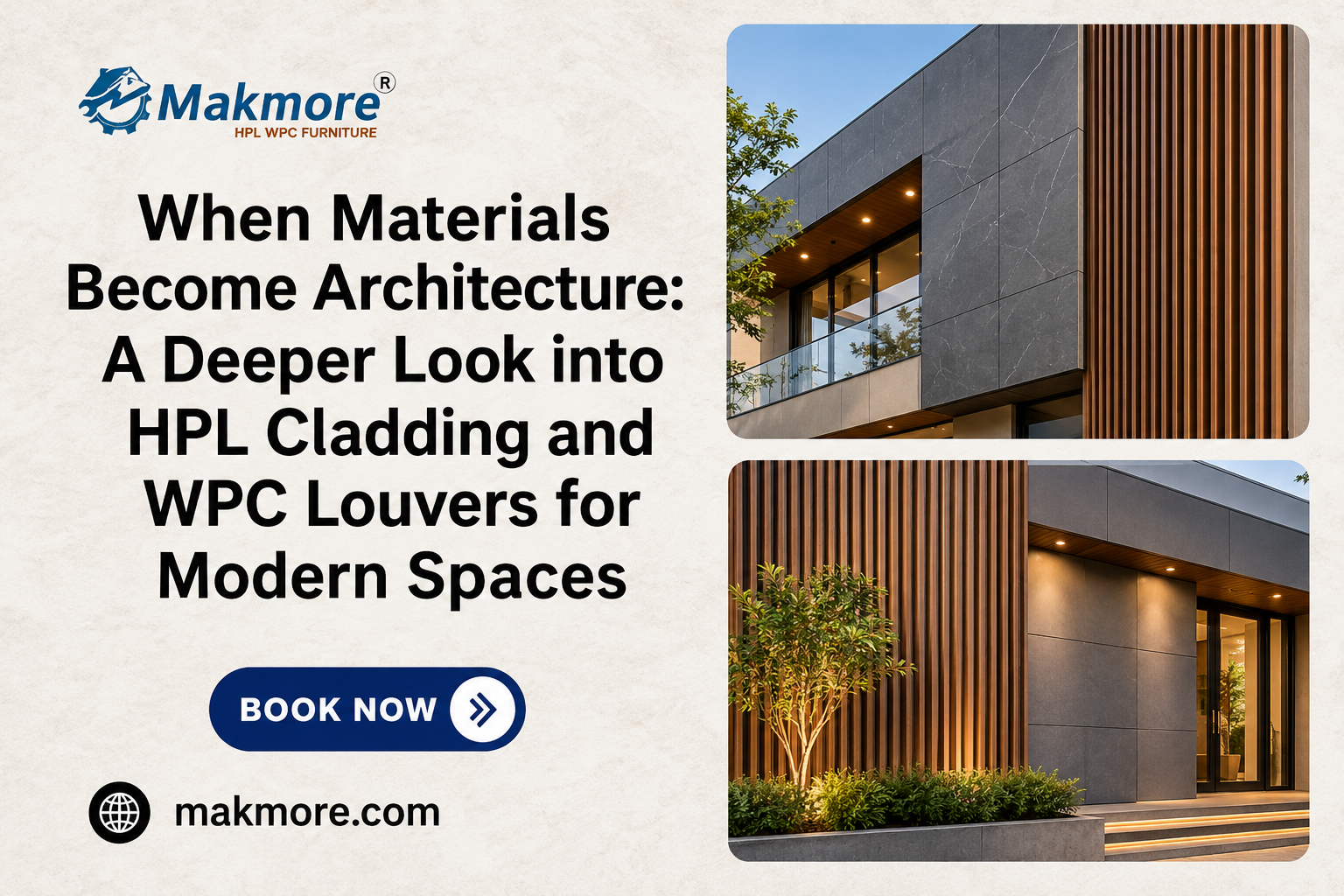
Great architecture is not about one material taking center stage. It is about the relationships between them. HPL offers expansive, composed surfaces, while WPC louvers add rhythm and depth. Together, they create façades where textures converse and complement each other.
Imagine a contemporary commercial building with a clean HPL façade interrupted by carefully positioned WPC elements. The result can feel neither excessively industrial nor traditionally decorative. Instead, it can sit between the two—modern, warm, structured, and visually balanced.This pairing is especially valuable when various parts of a building need their own identities, yet still feel united by a single architectural vision.
Designing for Bangalore: Where Contemporary Style Meets Practical Thinking
Bangalore’s architecture evolves in step with its growing neighborhoods, businesses, and commercial hubs. As design awareness rises, exterior materials must now deliver both beauty and performance. This makes thoughtful material selection essential.
Choose a façade with its context in mind: surroundings, orientation, upkeep, installation, color scheme, and the broader design goal. Instead of picking a material for its standalone appeal, consider how it will interact as part of the whole.
A thoughtful façade strategy should focus on:
- Visual harmony between materials and architectural elements
- Long-term suitability for the intended application
- Consistent detailing across different façade sections
- A balance between contemporary aesthetics and practical requirements
The Future of Exterior Design Belongs to Materials With Both Character and Purpose
Architecture is embracing a more thoughtful kind of beauty. Today’s buildings do not chase attention with extravagance. Instead, they stand out through balance, texture, smart material choices, and careful detail.
HPL cladding and WPC louvers fit seamlessly into this evolving design language. They give designers fresh ways to sculpt façades, add visual depth, and infuse spaces with character.
Makmore champions this material-first approach, treating surfaces as integral to a building’s identity rather than mere finishing touches. The goal is clear: to craft spaces where function and beauty enhance each other, never competing.
The best buildings aren’t remembered merely for how they looked on the day they were completed; they are remembered for how naturally their materials, proportions, textures, and surroundings came together to create something that felt complete.
Faq
Q1. What factors should be considered before choosing HPL cladding for a building?
A1. The building’s design, location, exposure to environmental conditions, desired finish, colour scheme, installation method, and long-term maintenance expectations should all be considered before selecting HPL cladding.
Q2. Can HPL cladding enhance the visual appearance of a commercial building?
A2. Yes. HPL cladding can give commercial buildings a cleaner and more contemporary appearance while allowing designers to introduce different textures, patterns, and colour combinations.
Q3. What makes WPC louvers different from conventional decorative elements?
A3. WPC louvers create both texture and depth. Their repeated linear structure can add rhythm to a façade or wall while giving the space a warmer, wood-inspired appearance.
Q4. Are WPC louvers suitable for contemporary residential architecture?
A4. Yes. They can be incorporated into balconies, entrance areas, feature walls, façade sections, and other suitable spaces to create a modern yet welcoming visual character.
Q5. Can HPL sheets be used to create a wood-like appearance?
A5. Many HPL collections are available with wood-inspired textures and patterns. These finishes can help introduce the visual warmth of timber into contemporary architectural designs.